Share Article

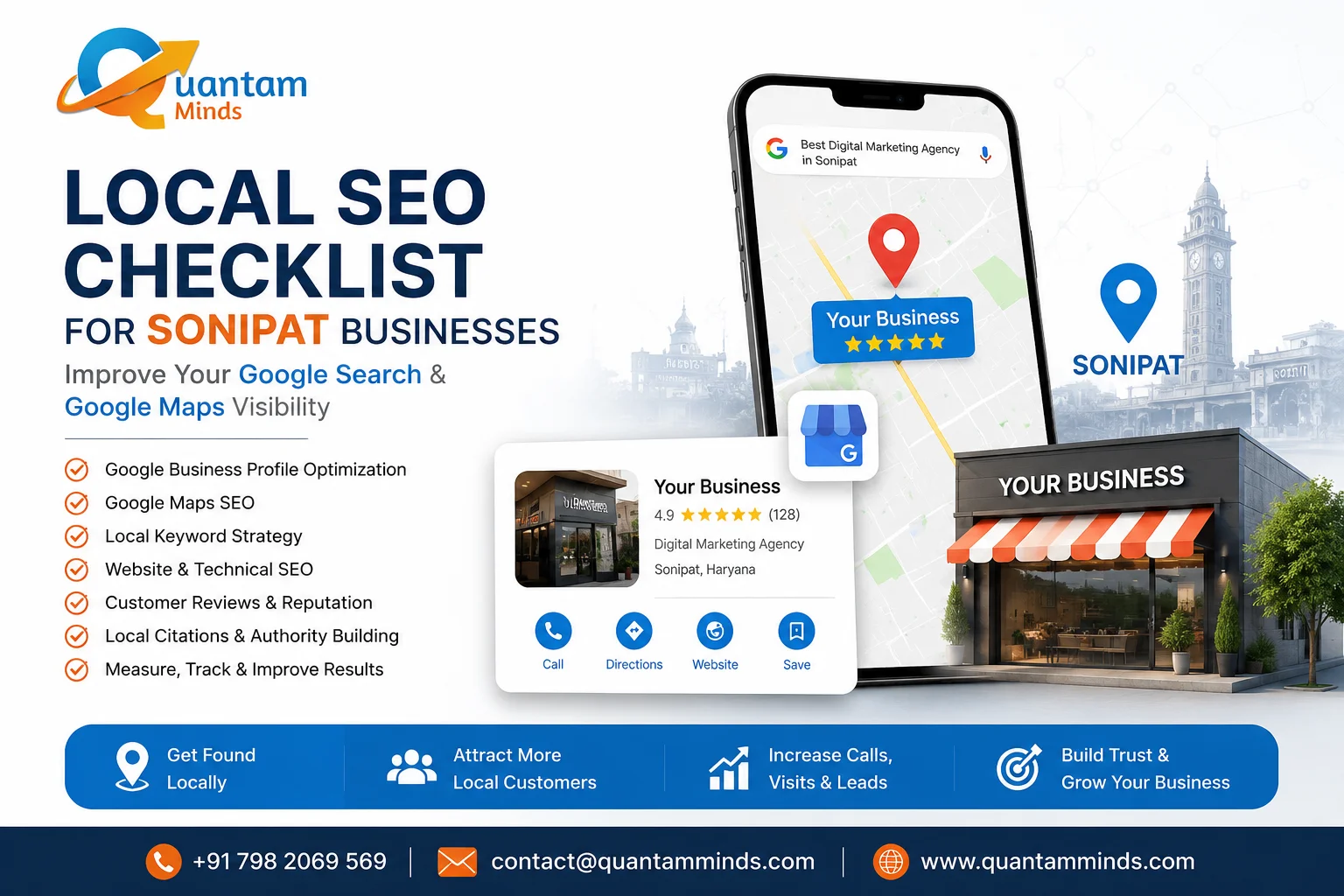
Local SEO Checklist for Sonipat Businesses: The Essential Steps to Improve Google Search and Google Maps Visibility

When business owners think about Local SEO, many immediately focus on ranking first on Google. While higher rankings are certainly valuable, the real objective is much broader—making it easy for nearby customers to discover your business, trust your brand, and contact you when they need your products or services. Whether someone searches for a restaurant, gym, clinic, manufacturer, coaching institute, or home service provider, Google now evaluates dozens of local ranking signals before deciding which businesses appear in Google Search and Google Maps.

This is why having a website alone is no longer enough. Businesses that consistently appear in local search results usually combine a well-optimized website, an active Google Business Profile, accurate business information, quality content, customer reviews, and a positive user experience. Together, these elements create a stronger local SEO strategy that helps search engines understand both your business and its relevance to nearby customers.

Rather than following a generic checklist, businesses should focus on the activities that have the greatest impact based on their industry, competition, and current online presence. The following local SEO checklist prioritizes the areas that typically deserve attention first.

Start with Your Google Business Profile

For most local businesses, Google Business Profile is the foundation of Google Maps SEO.

When someone searches for services "near me" or includes a location in their search, Google often displays Business Profiles before traditional website results. A complete and regularly updated profile helps Google understand your business while giving customers the information they need to contact or visit you.

Your profile should include:

  • Accurate business name.
  • Correct address.
  • Primary and secondary business categories.
  • Phone number.
  • Website URL.
  • Business hours.
  • Service descriptions.
  • Products or services.
  • High-quality photos.
  • Frequently asked questions.
  • Regular business updates.

Completing your profile is only the beginning. Ongoing Google Business Profile optimization helps keep information accurate as your business changes over time.

Maintain Consistent Business Information Everywhere

One of the most overlooked Local SEO factors is consistency.

Your business name, address, and phone number should remain the same across:

  • Your website.
  • Google Business Profile.
  • Business directories.
  • Social media profiles.
  • Industry listings.
  • Local directories.

Even small differences in abbreviations, phone numbers, or addresses can create confusion for search engines.

Consistent information strengthens local business SEO by reinforcing your business identity across multiple trusted sources.

Build a Website That Supports Local Search

Your website should do much more than introduce your business.

It should help search engines understand:

  • What services you offer.
  • Which locations you serve.
  • Who your customers are.
  • Why your business is relevant.

Important website improvements include:

Website Element Why It Matters
Fast loading speed Improves user experience and supports search performance.
Mobile responsiveness Most local searches happen on mobile devices.
Individual service pages Helps Google understand specific services.
Contact page with map Reinforces local relevance.
Clear internal linking Helps visitors and search engines navigate the website.
Local keywords used naturally Supports location-specific search intent.

A technically strong website complements your Google Business Profile rather than replacing it.

Local search and social media often support each other. While Local SEO helps customers find your business through Google, our Social Media Marketing Services help you stay visible across platforms like Facebook and Instagram, building stronger brand awareness and customer engagement within your local market.

Create Content That Answers Local Customer Questions

Many businesses focus only on service pages.

However, customers often search for questions before searching for businesses.

Examples include:

  • How much does this service cost?
  • Which option is suitable for me?
  • How long does the process take?
  • What should I prepare before visiting?

Publishing helpful content builds topical authority while giving search engines additional reasons to recommend your website.

For small businesses, educational content often supports local SEO for small business by expanding visibility beyond direct service searches.

Collect Genuine Customer Reviews Consistently

Customer reviews influence both trust and local visibility.

Rather than requesting dozens of reviews in a short period, encourage satisfied customers to leave honest feedback as part of your normal customer experience.

Good review management includes:

  • Responding politely to reviews.
  • Thanking customers.
  • Addressing concerns professionally.
  • Encouraging detailed feedback.
  • Monitoring reviews regularly.

Authentic reviews help future customers make informed decisions while strengthening your online reputation.

Optimize for Google Maps, Not Just Google Search

Many businesses focus entirely on traditional search rankings while overlooking Google Maps.

Yet Maps often receives significant local search traffic, particularly from mobile users looking for nearby businesses.

Improving Google Maps SEO may involve:

  • Optimizing your Google Business Profile.
  • Maintaining accurate business information.
  • Adding quality business photos.
  • Collecting customer reviews.
  • Selecting appropriate business categories.
  • Updating services regularly.
  • Posting business updates.
  • Keeping operating hours current.

Together, these activities help improve your local presence over time.

Strengthen Technical SEO Behind the Scenes

Technical improvements may not be visible to customers, but they support better website performance.

Review areas such as:

  • Website speed.
  • Mobile usability.
  • HTTPS security.
  • XML sitemap.
  • Broken links.
  • Structured data.
  • Image optimization.
  • Crawlability.
  • Internal linking.

Technical SEO creates a stronger foundation for all other optimization activities.

Build Local Authority Through Relevant Mentions

Search engines also consider how often your business is mentioned across trusted websites.

Local authority can be strengthened through:

  • Local business directories.
  • Industry associations.
  • Chamber of commerce listings.
  • Community partnerships.
  • Local event participation.
  • Business citations.
  • Relevant local publications.

Quality matters more than quantity.

A few trustworthy mentions are generally more valuable than dozens of low-quality directory submissions.

A professional online presence depends on more than rankings alone. Our Graphic Designing Services create high-quality visuals for websites, Google Business Profiles, advertisements, and social media, helping businesses build trust and maintain a consistent brand identity across digital platforms.

Monitor Performance Instead of Guessing

Local SEO should be measured regularly.

Useful indicators include:

  • Google Business Profile views.
  • Website clicks.
  • Direction requests.
  • Phone calls.
  • Contact form enquiries.
  • Local keyword visibility.
  • Google Maps impressions.
  • Customer reviews.
  • Website traffic.

Monitoring these metrics helps identify which improvements are producing meaningful results and where additional optimization may be be required.

Prioritize Based on Your Business Type

Not every business should follow the exact same Local SEO checklist.

For example:

Business Type Highest Priorities
Restaurant Reviews, Google Maps, photos, business hours
Clinic Local SEO, educational content, patient reviews
Gym Google Business Profile, local content, images, reviews
Manufacturer Service pages, technical SEO, lead-focused content
Coaching Institute Local landing pages, FAQs, Google Business Profile
Home Service Business Service-area optimization, customer reviews, local citations

Understanding your business model helps you prioritize improvements instead of attempting every SEO activity at once.

Local SEO Is a Continuous Process, Not a One-Time Checklist

Many businesses expect Local SEO to produce lasting results after a single round of optimization. In reality, local search evolves continuously. Competitors update their websites, customers leave new reviews, Google introduces algorithm changes, and search behaviour shifts over time. Businesses that review and improve their online presence regularly are generally better positioned to maintain visibility than those that treat Local SEO as a one-time project.

Whether you're building your first local SEO strategy or refining an existing one, focus on consistent improvements rather than quick fixes. Prioritize your Google Business Profile, maintain accurate business information, create helpful content, improve website performance, encourage genuine customer reviews, and monitor your progress using meaningful business metrics. These activities work together to strengthen local business SEO, improve Google Maps SEO, and make it easier for potential customers to discover your business when searching for relevant services in their local area.

Following a Local SEO checklist is a great starting point, but consistent optimization is what helps businesses stay competitive over time. Explore our Local SEO Services to learn how ongoing Google Business Profile optimization, local keyword research, citation management, and technical improvements can strengthen your visibility in Google Search and Google Maps.

Google Business Profile Optimization: The Most Important Local SEO Strategy for Businesses in Sonipat

If you ask experienced Local SEO professionals which single factor deserves the most attention for a business serving a local market, many will point to the Google Business Profile. Whether someone searches for a nearby restaurant, gym, clinic, coaching institute, real estate consultant, manufacturer, or service provider, Google frequently displays Business Profiles before traditional website results. In many cases, a customer decides whether to call, visit, or compare another business without ever opening a website.

This is why Google Business Profile optimization has become one of the most important parts of any local SEO strategy. A complete and actively managed profile helps Google understand your business while giving potential customers accurate, trustworthy information when they need it most.

Many businesses create a profile once and assume the work is finished. In reality, Google Business Profile requires ongoing optimization. Search results change, customer expectations evolve, and Google's local algorithms continue to improve. Businesses that regularly update their profiles are generally better positioned to maintain strong local visibility over time.

Complete Every Profile Section Before Focusing on Rankings

Many Business Profiles remain incomplete even after verification.

Google uses profile information to understand what your business offers, who it serves, and when it should appear in local search results.

Before worrying about rankings, ensure your profile includes:

  • Business name.
  • Primary category.
  • Secondary categories.
  • Business description.
  • Website link.
  • Phone number.
  • Complete address.
  • Business hours.
  • Holiday hours.
  • Appointment links (where applicable).
  • Service areas.
  • Opening date.
  • Attributes relevant to your business.

A complete profile not only improves user experience but also provides Google with more context about your business.

Choose the Right Business Categories

Business categories play a significant role in Google Business Profile SEO because they help Google determine which searches are most relevant to your business.

Your primary category should describe your core service.

Examples include:

  • Dental Clinic
  • Gym
  • Restaurant
  • Digital Marketing Agency
  • Real Estate Agency
  • Manufacturer

Secondary categories should only be added when they accurately reflect additional services.

Avoid selecting unrelated categories simply to appear in more searches. Relevance is generally more valuable than quantity.

Add Detailed Products and Services

Many businesses overlook the Products and Services sections, even though they provide valuable information for both customers and search engines.

Instead of listing only service names, include:

  • Clear descriptions.
  • Service highlights.
  • Relevant pricing where appropriate.
  • Business-specific terminology.
  • Natural keywords.
  • Customer-focused explanations.

For example, rather than writing:

SEO Services

You could describe:

Search Engine Optimization services designed to help businesses improve organic visibility, strengthen Local SEO, and increase their presence in Google Search through technical optimization, content improvements, and ongoing SEO strategy.

This supports both customer understanding and SEO for Google My Business.

Publish Google Business Profile Posts Regularly

Google Posts function like small updates that keep your Business Profile active.

Useful post ideas include:

  • New services.
  • Business announcements.
  • Seasonal offers.
  • Educational tips.
  • Customer success stories.
  • Community participation.
  • Holiday schedules.
  • Frequently asked questions.

Regular posting demonstrates that your business remains active.

Although posts alone may not dramatically improve rankings, they contribute to a stronger overall profile and provide customers with fresh information.

Build a Strong Review Strategy

Customer reviews are one of the strongest trust signals within local search.

Rather than focusing on collecting as many reviews as possible, prioritize quality and consistency.

Encourage customers to leave genuine reviews after completing a service or purchase.

Good review management includes:

  • Responding to positive reviews.
  • Addressing negative feedback professionally.
  • Thanking customers.
  • Answering questions politely.
  • Avoiding artificial review generation.

Reviews help future customers evaluate your business while supporting stronger local credibility.

Answer Questions Before Customers Need to Ask

The Questions & Answers section is often underutilized.

Yet many customers want quick answers before contacting a business.

Common questions include:

  • Do you offer free consultations?
  • Is parking available?
  • Which payment methods are accepted?
  • Do you serve nearby areas?
  • What are your operating hours?
  • How can appointments be booked?

Providing accurate answers improves customer experience while reducing uncertainty during the decision-making process.

Businesses should also monitor this section regularly because customers can submit new questions at any time.

Upload High-Quality Photos Consistently

Photos influence customer trust more than many businesses realize.

People often compare businesses visually before making contact.

Useful photo categories include:

  • Exterior of the business.
  • Interior workspace.
  • Team members.
  • Products.
  • Services in action.
  • Equipment.
  • Office environment.
  • Customer waiting area.
  • Completed projects where appropriate.

Regularly updated photos signal that the business remains active and help customers know what to expect before visiting.

Image quality generally matters more than image quantity.

Understand How AI Is Changing Local Search

Google increasingly uses artificial intelligence to summarize business information across search results.

These AI-generated summaries often draw information from multiple sources, including:

  • Google Business Profile.
  • Business websites.
  • Customer reviews.
  • Frequently asked questions.
  • Service descriptions.
  • Publicly available information.

This means consistency is becoming even more important.

If your Business Profile, website, and other online sources describe your business differently, Google may have greater difficulty understanding your services accurately.

Maintaining consistent, detailed, and regularly updated information helps support stronger visibility in AI-powered local search experiences.

Keep Business Information Updated Throughout the Year

Many businesses only update their profile when something changes dramatically.

Instead, schedule regular reviews.

Check items such as:

Profile Element Review Frequency
Business Hours Monthly and before holidays
Contact Details Whenever changes occur
Services As new services are introduced
Photos Monthly
Business Posts Weekly or monthly
Reviews Weekly
Questions & Answers Weekly
Products As inventory or offerings change

Ongoing maintenance is an important part of effective GMB optimization because outdated information can reduce customer confidence.

Monitor Performance Through Google Business Profile Insights

Optimization should always be supported by measurement.

Useful metrics include:

  • Search views.
  • Maps views.
  • Website clicks.
  • Phone calls.
  • Direction requests.
  • Photo views.
  • Customer actions.
  • Popular search queries.

Rather than focusing on one metric alone, evaluate overall trends.

For example, increasing direction requests and phone calls may indicate stronger local visibility even if ranking positions fluctuate.

Common Google Business Profile Mistakes That Limit Local Visibility

Many businesses unknowingly reduce their local search potential by making avoidable mistakes.

Some of the most common include:

  • Incomplete profiles.
  • Incorrect business categories.
  • Outdated business hours.
  • Few or outdated photos.
  • Ignoring customer reviews.
  • Never publishing business posts.
  • Inconsistent business information across platforms.
  • Thin service descriptions.
  • Neglecting Questions & Answers.
  • Treating optimization as a one-time task.

Correcting these issues often strengthens the overall quality of the profile while improving customer experience.

Google Business Profile Optimization Is an Ongoing Local SEO Investment

Successful Google My Business optimization is not about completing a checklist once and expecting permanent rankings. It involves continuously improving the information customers see when they search for your business. A complete profile, relevant categories, detailed service descriptions, authentic customer reviews, regular updates, quality photos, and accurate business information all work together to strengthen Google Business Profile SEO over time.

Whether you're a local retailer, healthcare provider, restaurant, manufacturer, coaching institute, or service-based business, investing in ongoing Google Business Profile optimization helps make your business easier to discover, easier to trust, and easier to contact. Results typically depend on competition, profile quality, website support, and consistent implementation, but maintaining an active and well-optimized profile remains one of the most effective long-term strategies for improving local search visibility and Google Maps presence.

Optimizing your Google Business Profile delivers the best results when it works alongside a well-optimized website. Our SEO Services combine technical SEO, content optimization, on-page improvements, and local search strategies to help businesses build stronger organic visibility beyond Google Maps.

Free Strategy Consultation

Turn These Insights Into Business Growth

Our experts help businesses convert ideas into measurable digital growth through strategy, technology and performance-driven execution.

Free Initial Consultation
Experienced Industry Experts
Tailored Business Solutions
Transparent Recommendations

Let's Talk

Discuss your business goals with our specialists and discover practical digital solutions that align with your objectives.

Book Free Consultation Call +91 79820 69569

Why Many Sonipat Businesses Still Don't Rank Locally Even After Doing Basic Local SEO

A common frustration among business owners is, "We've already done Local SEO, so why aren't we appearing on Google or Google Maps?" This question comes up frequently because many businesses believe that creating a Google Business Profile, adding a few keywords to their website, and collecting a handful of reviews is enough to improve local visibility.

In reality, Local SEO is not a checklist you complete once. Google's local search algorithm evaluates hundreds of signals that work together. A business may perform well in one area but still struggle because of weaknesses in another. For example, a fully optimized Google Business Profile cannot compensate for a slow website, poor content, inconsistent business information, or weak online authority.

This is why two businesses offering similar services in the same city can achieve very different levels of local visibility. The difference usually lies in the overall quality and consistency of their digital presence rather than a single SEO activity.

Let's look at the most common reasons businesses continue to struggle even after implementing basic local SEO strategies.

Local SEO Requires More Than a Google Business Profile

One of the biggest misconceptions is that optimizing a Google Business Profile automatically guarantees strong local rankings.

While your Business Profile is extremely important, Google also evaluates:

  • Website quality.
  • Content relevance.
  • Local authority.
  • Customer reviews.
  • Technical SEO.
  • User experience.
  • Business consistency across the web.
  • Search intent alignment.

A business with an excellent Google Business Profile but a weak website may still struggle to compete against businesses with stronger overall digital foundations.

Local SEO works best when every digital asset supports the others.

Duplicate Business Listings Create Confusion

Duplicate listings remain one of the most overlooked Local SEO problems.

Businesses sometimes create multiple Google Business Profiles after changing locations, updating phone numbers, or working with different marketing providers.

This can lead to:

  • Split customer reviews.
  • Conflicting business information.
  • Customer confusion.
  • Reduced trust signals.
  • Difficulty for Google in identifying the primary listing.

Before investing further in Local SEO, businesses should ensure only one accurate and verified Business Profile represents each legitimate business location.

Inconsistent NAP Information Weakens Local Trust

NAP stands for:

  • Name
  • Address
  • Phone Number

Google compares this information across multiple online sources.

Problems often occur when businesses display different information on:

  • Their website.
  • Google Business Profile.
  • Facebook.
  • Business directories.
  • Local listings.
  • Industry portals.

For example:

Website:

ABC Dental Clinic

Google Profile:

ABC Dental Care

Directory:

ABC Multispeciality Dental Clinic

Although these differences may seem minor, they reduce consistency and make it harder for search engines to confidently associate all references with the same business.

Maintaining consistent NAP information strengthens local trust signals.

Weak Website Content Limits Local Visibility

Many local business websites contain only a few short paragraphs describing their services.

Unfortunately, this gives Google very little information about:

  • What the business specializes in.
  • Which problems it solves.
  • Which customers it serves.
  • Which locations it targets.

Thin content often results in poor topical authority.

Instead, businesses should create detailed pages covering:

  • Individual services.
  • Frequently asked questions.
  • Industry-specific topics.
  • Customer concerns.
  • Local relevance.
  • Educational resources.

High-quality content helps both customers and search engines understand the business more effectively.

Thin Service Pages Rarely Compete Well

A common issue seen across many small business websites is the use of very brief service pages.

For example:

SEO Services

We provide SEO services for all businesses. Contact us today.

This type of content provides very little value.

A stronger service page explains:

  • The service.
  • Who it is suitable for.
  • Common business challenges.
  • The process involved.
  • Expected outcomes.
  • Frequently asked questions.
  • Related services.

Comprehensive pages generally perform better because they satisfy user intent more effectively.

Slow Websites Affect Both Rankings and Customer Experience

Website speed influences much more than technical SEO.

A slow-loading website often causes visitors to leave before exploring your services.

Common causes include:

  • Large images.
  • Poor hosting.
  • Unoptimized code.
  • Excessive plugins.
  • Slow server response.
  • Uncompressed media.

Even if your Google Business Profile performs well, a poor website experience may reduce customer engagement after users click through.

Improving website performance supports both SEO and user satisfaction.

Poor Internal Linking Makes It Difficult for Search Engines

Internal links help search engines understand how different pages relate to one another.

Unfortunately, many local business websites contain isolated pages with very few internal connections.

A strong internal linking structure should connect:

  • Service pages.
  • Location pages.
  • Blog articles.
  • FAQs.
  • Contact page.
  • Industry pages.

This helps distribute authority throughout the website while making navigation easier for visitors.

Lack of Local Authority Reduces Search Confidence

Google evaluates not only your own website but also how your business is referenced elsewhere.

Local authority develops through:

  • Business directories.
  • Chamber of Commerce listings.
  • Industry associations.
  • Local partnerships.
  • Community involvement.
  • Relevant business citations.
  • Local news mentions.

Businesses with stronger local authority often appear more trustworthy than those with little external presence.

Quality always matters more than quantity.

Weak EEAT Signals Can Limit Healthcare, Finance, and Professional Services

Google increasingly evaluates websites using EEAT principles:

  • Experience
  • Expertise
  • Authoritativeness
  • Trustworthiness

For local businesses, strong EEAT signals may include:

  • Detailed About pages.
  • Team information.
  • Professional certifications.
  • Customer testimonials.
  • Service transparency.
  • Accurate contact information.
  • Helpful educational content.
  • Updated business information.

Businesses that demonstrate expertise and transparency often build greater confidence with both customers and search engines.

Local SEO Often Fails Because Everything Is Done Once

One of the most common mistakes is treating Local SEO as a one-time project.

Many businesses:

  • Verify their Google Business Profile.
  • Add a few website keywords.
  • Collect several reviews.
  • Stop updating everything.

Meanwhile, competitors continue to:

  • Publish new content.
  • Collect customer reviews.
  • Improve website performance.
  • Update service pages.
  • Add new business photos.
  • Optimize technical SEO.
  • Expand local authority.

Over time, these continuous improvements often produce stronger local visibility.

Common Local SEO Problems and Their Business Impact

Problem Potential Impact
Duplicate Google Business Profiles Confuses Google and customers
Inconsistent NAP Weakens local trust signals
Thin service pages Lower relevance for local searches
Slow website Higher visitor drop-off and weaker user experience
Poor internal linking Makes website navigation and crawling more difficult
Limited customer reviews Reduces trust and local credibility
Weak local citations Lower local authority
Outdated business information Poor customer experience
Minimal educational content Reduced topical authority
Inactive Google Business Profile Fewer opportunities to engage local customers

Local SEO Success Comes From Building a Strong Digital Ecosystem

Many businesses searching for local SEO services in Sonipat expect one activity to solve every visibility problem. In practice, successful Local SEO comes from improving multiple areas together. A complete Google Business Profile, consistent business information, high-quality website content, strong technical performance, meaningful internal linking, authentic customer reviews, and trustworthy EEAT signals all contribute to better local search performance.

Whether you manage Local SEO yourself or work with an SEO company in Sonipat, the objective should not be simply to "rank higher." It should be to create a reliable digital presence that helps search engines understand your business and gives customers enough confidence to choose you over competing businesses. Results typically depend on your industry, local competition, website quality, and the consistency of your optimization efforts, but businesses that continuously strengthen these foundations are generally better positioned to improve their visibility in both Google Search and Google Maps over the long term.

Local rankings often suffer because the website itself isn't built for search visibility or user experience. Our Website Development Services focus on creating fast, mobile-friendly, SEO-ready websites that provide a stronger technical foundation for long-term Local SEO success.

How to Measure Whether Your Local SEO Strategy Is Actually Working

One of the biggest misconceptions about Local SEO is that success can be measured by rankings alone. While appearing at the top of Google Search or Google Maps is certainly encouraging, rankings don't always tell the full story. A business might rank well for a keyword that rarely generates enquiries, while another business with slightly lower rankings could receive significantly more phone calls, website visits, and customers.

The real purpose of a local SEO strategy is not simply to improve visibility—it is to help nearby customers find your business and take meaningful actions. That is why measuring Local SEO requires looking beyond keyword positions and focusing on business outcomes.

Many business owners receive monthly SEO reports filled with charts and ranking data but still don't know whether their investment is contributing to business growth. Understanding which metrics matter helps you make better decisions and identify opportunities for continuous improvement.

Start by Defining What Success Means for Your Business

Different businesses have different objectives.

For example:

  • A restaurant may want more direction requests and reservations.
  • A clinic may focus on appointment enquiries.
  • A gym may monitor membership enquiries.
  • A manufacturer may track quotation requests.
  • A coaching institute may prioritize admission enquiries.

Before measuring Local SEO performance, define the actions that represent success for your business.

Typical goals include:

  • Phone calls.
  • Website enquiries.
  • Store visits.
  • Appointment bookings.
  • Quote requests.
  • Direction requests.
  • Product enquiries.
  • Local website traffic.

Once these goals are clear, it becomes much easier to evaluate whether your SEO efforts are moving in the right direction.

Monitor Google Business Profile Insights

Your Google Business Profile provides valuable information about how customers discover and interact with your business.

Useful metrics include:

  • Search views.
  • Google Maps views.
  • Website clicks.
  • Phone calls.
  • Direction requests.
  • Customer actions.
  • Photo views.
  • Popular search terms.

Instead of reviewing these numbers once, compare trends over several months.

For example:

  • Are website clicks increasing?
  • Are more people requesting directions?
  • Has the number of phone calls improved?
  • Which search queries generate the most visibility?

These trends often provide more meaningful insights than daily fluctuations.

Phone Calls Often Indicate Strong Local Intent

Many local customers prefer calling before visiting a business.

For service-based businesses especially, phone enquiries are often one of the strongest indicators of Local SEO performance.

Monitor:

  • Number of calls.
  • Peak enquiry times.
  • Calls generated through Google Business Profile.
  • Calls from website visitors.
  • Frequently asked customer questions.

An increase in qualified phone enquiries may indicate stronger local visibility even if rankings remain relatively stable.

Track Direction Requests from Google Maps

Direction requests are another valuable Local SEO metric.

Customers usually request directions when they are seriously considering visiting your location.

Businesses such as:

  • Restaurants.
  • Clinics.
  • Gyms.
  • Retail stores.
  • Salons.
  • Educational institutes.

often benefit significantly from monitoring this data.

Increasing direction requests generally suggest improved Google Maps SEO and stronger local relevance.

Measure Website Clicks from Local Search

Ranking well is only valuable if people choose to visit your website.

Monitor:

  • Google Business Profile website clicks.
  • Organic local traffic.
  • Landing pages receiving local visitors.
  • Mobile versus desktop visits.
  • Average engagement time.
  • Bounce rate.

These metrics help determine whether your search visibility is translating into meaningful website engagement.

Monitor Enquiry Forms and Contact Requests

Many businesses focus heavily on website traffic while overlooking conversions.

A smaller number of highly qualified enquiries often provides more value than a large volume of untargeted visitors.

Track:

  • Contact form submissions.
  • Quote requests.
  • Appointment bookings.
  • Consultation requests.
  • Callback requests.
  • WhatsApp enquiries (where applicable).

Reviewing these enquiries alongside Local SEO activities helps identify which optimization efforts are generating meaningful customer interactions.

Keyword Visibility Still Matters—but Not Alone

Keyword rankings remain useful, but they should be interpreted carefully.

Instead of tracking hundreds of keywords, focus on searches that directly relate to your services.

Examples include:

  • Digital marketing agency near me.
  • Dentist near me.
  • Gym in my area.
  • Restaurant nearby.
  • SEO company.
  • Physiotherapy clinic.

Questions to ask include:

  • Are rankings improving for important service keywords?
  • Are location-based searches becoming more visible?
  • Which pages appear most frequently?

Rankings should support business goals rather than becoming the goal themselves.

Review Google Maps Performance

Many businesses receive more customer interactions through Google Maps than through traditional search results.

Useful Google Maps indicators include:

  • Maps impressions.
  • Discovery searches.
  • Direction requests.
  • Phone calls.
  • Photo views.
  • Customer actions.
  • Business profile engagement.

Strong Maps performance often reflects effective Local SEO, especially for businesses serving nearby customers.

Customer Reviews Reveal More Than Reputation

Reviews influence both customer trust and Local SEO performance.

Instead of monitoring only the average rating, also evaluate:

  • Number of new reviews.
  • Review frequency.
  • Customer feedback themes.
  • Response time.
  • Service improvements mentioned.
  • Common customer questions.

Review trends often highlight operational strengths and weaknesses that can improve both customer experience and future marketing.

Track Local Conversions Instead of Traffic Alone

Ultimately, Local SEO should contribute to meaningful business activity.

Examples of local conversions include:

Business Type Valuable Local Conversion
Restaurant Table reservation
Clinic Appointment booking
Gym Membership enquiry
Real Estate Agency Property enquiry
Coaching Institute Admission enquiry
Retail Store Store visit
Manufacturer Quote request
Service Business Consultation request

Traffic becomes much more valuable when it leads to actions that support your business objectives.

Create a Monthly Local SEO Performance Dashboard

Instead of reviewing isolated metrics, create a simple dashboard that tracks performance consistently.

A practical dashboard may include:

Metric Why It Matters
Google Business Profile Views Indicates overall local visibility
Google Maps Views Measures map discovery
Website Clicks Shows customer interest
Phone Calls Reflects local buying intent
Direction Requests Indicates potential store visits
Contact Form Enquiries Measures website conversions
Customer Reviews Builds trust and local authority
Local Keyword Visibility Tracks search performance
Organic Website Traffic Measures search engine visibility
Conversion Rate Evaluates overall effectiveness

Reviewing these metrics monthly helps identify patterns rather than reacting to short-term fluctuations.

Understand That Local SEO Is a Long-Term Process

One of the most important things to remember is that Local SEO rarely improves in a perfectly straight line. Search algorithms evolve, competitors update their websites, customers leave new reviews, and seasonal demand changes throughout the year. It is normal to see some variation in rankings and traffic.

Instead of focusing on daily movements, evaluate whether your business is gradually improving its visibility, customer engagement, and local enquiries over time. Consistent optimization often produces more sustainable results than making frequent changes based on short-term data.

Measure Business Outcomes, Not Just SEO Metrics

An effective local SEO strategy should help businesses become easier to find, easier to trust, and easier to contact. Whether you're implementing local SEO for small business yourself or working with an agency, success should be measured through meaningful customer actions rather than rankings alone. Google Business Profile Insights, website clicks, phone calls, direction requests, enquiry forms, keyword visibility, Google Maps SEO performance, customer reviews, and local conversions all contribute to a more complete picture of your Local SEO performance.

By reviewing these metrics consistently and making informed improvements over time, businesses can better understand which strategies are working, where opportunities exist, and how their Local SEO efforts are supporting real business objectives rather than simply improving search positions.

While Local SEO focuses on long-term visibility, some businesses also use paid advertising to reach customers immediately. Discover how our Google Ads Services can complement your Local SEO strategy by helping you appear for high-intent searches while your organic presence continues to grow.

Free Strategy Consultation

Turn These Insights Into Business Growth

Our experts help businesses convert ideas into measurable digital growth through strategy, technology and performance-driven execution.

Free Initial Consultation
Experienced Industry Experts
Tailored Business Solutions
Transparent Recommendations

Let's Talk

Discuss your business goals with our specialists and discover practical digital solutions that align with your objectives.

Book Free Consultation Call +91 79820 69569

How to Choose the Right Local SEO Agency in Sonipat for Long-Term Business Growth

Choosing a Local SEO agency is one of the most important decisions a local business can make. Whether you own a clinic, gym, restaurant, coaching institute, manufacturing company, retail store, or any other service-based business, the agency you choose can influence how effectively your business appears in Google Search and Google Maps. However, many business owners compare agencies only on price or promises, without understanding what actually contributes to successful Local SEO.

A professional Local SEO strategy is about much more than adding keywords to a website or verifying a Google Business Profile. It involves understanding local customer behaviour, optimizing technical website performance, improving Google Business Profile visibility, building local authority, creating helpful content, and continuously adapting as Google's search algorithms evolve.

Fitness businesses rely heavily on local customers searching for nearby gyms and personal training services. Explore our Digital Marketing for Gyms and SEO for Clinic solutions to learn how Local SEO, Google Business Profile optimization, and targeted marketing strategies can help increase local visibility and membership enquiries.

Rather than asking, "Which agency offers the cheapest package?", a better question is:

"Which agency understands my business, explains its strategy clearly, and provides a realistic plan for long-term local visibility?"

The following factors can help you evaluate agencies more confidently before making your decision.

Start by Defining What Your Business Wants to Achieve

Before speaking with any agency, spend some time identifying your own objectives.

Different businesses require different Local SEO strategies.

For example:

  • A restaurant may want more walk-in customers.
  • A clinic may focus on appointment bookings.
  • A gym may prioritize membership enquiries.
  • A manufacturer may want qualified B2B enquiries.
  • A coaching institute may aim to increase admissions.

Once your goals are clear, it becomes much easier to evaluate whether an agency's recommendations actually support your business.

An agency should ask about your objectives before recommending services—not simply offer the same package to every client.

Look for Experience in Local Search, Not Just General SEO

SEO and Local SEO share many principles, but they are not identical.

Local SEO requires additional expertise in areas such as:

  • Google Business Profile optimization.
  • Google Maps visibility.
  • Local keyword research.
  • Service-area optimization.
  • Local citations.
  • Customer review management.
  • Local landing pages.
  • Geographic search intent.

When comparing a local SEO agency, ask about their experience managing businesses that depend on local customers rather than only national or ecommerce websites.

Ask How Their Local SEO Strategy Is Built

A structured strategy is often a good indicator of professional experience.

Instead of asking:

"Can you rank my business?"

Ask questions such as:

  • How do you audit my current online presence?
  • How do you identify local competitors?
  • How do you choose local keywords?
  • How will you improve my Google Business Profile?
  • How do you prioritize SEO activities?
  • How frequently is the strategy reviewed?

Clear answers usually indicate that the agency follows a defined process rather than relying on guesswork.

If you sell products online, Local SEO can help nearby customers discover your business, while a well-built online store helps convert that interest into sales. Our Ecommerce Website Development Services deliver secure, responsive, and SEO-friendly shopping experiences designed for long-term business growth.

Understand What a Local SEO Package Should Include

Many business owners compare pricing without understanding what is actually included.

A comprehensive Local SEO package may include:

Local SEO Activity Why It Matters
Google Business Profile Optimization Improves local search and Google Maps visibility
Website SEO Audit Identifies technical and content issues
Local Keyword Research Targets searches from nearby customers
On-Page SEO Optimizes service and location pages
Technical SEO Improves website performance and crawlability
Local Citation Management Strengthens business consistency across directories
Review Strategy Supports customer trust and local authority
Monthly Reporting Tracks performance and identifies improvements
Ongoing Optimization Keeps the strategy aligned with changing search trends

Understanding these deliverables helps businesses compare local SEO services for small business more effectively.

Ask How Google Business Profile Will Be Managed

Your Google Business Profile is often one of the most important local ranking assets.

Ask whether the agency provides:

  • Profile optimization.
  • Business category recommendations.
  • Service updates.
  • Photo management.
  • Google Posts.
  • Review guidance.
  • Questions & Answers management.
  • Performance monitoring.

These activities are often included within professional Google My Business SEO services, but the level of support varies between providers.

Understand How Success Will Be Measured

Many agencies focus only on keyword rankings.

While rankings are useful, they should not be the only measurement of success.

A stronger reporting approach may include:

  • Google Business Profile performance.
  • Google Maps visibility.
  • Website traffic.
  • Phone calls.
  • Direction requests.
  • Contact form enquiries.
  • Customer reviews.
  • Local keyword visibility.
  • Conversion trends.

These metrics provide a better understanding of how Local SEO contributes to real business outcomes.

Be Careful of Unrealistic Guarantees

Local SEO depends on many factors that no agency can fully control.

These include:

  • Competition.
  • Search algorithm updates.
  • Customer behaviour.
  • Website quality.
  • Industry demand.
  • Existing online authority.

Be cautious if an agency guarantees:

  • Number one Google rankings.
  • Instant results.
  • Fixed enquiry numbers.
  • Permanent ranking positions.
  • Guaranteed business growth.

Professional agencies usually explain that results depend on competition, vary by industry, and improve through continuous optimization rather than guaranteed outcomes.

Evaluate Communication Before Signing an Agreement

A successful Local SEO campaign often develops over several months.

Good communication helps businesses understand progress, ask questions, and adjust priorities as needed.

Consider asking:

  • Who will manage my account?
  • How often will reports be shared?
  • Will strategy meetings be scheduled?
  • How quickly are questions answered?
  • How are campaign recommendations explained?

Transparent communication often creates stronger long-term partnerships than impressive sales presentations.

Compare Value Instead of Monthly Pricing

Businesses often compare proposals by looking only at the monthly fee.

Instead, compare:

  • Strategy quality.
  • Scope of services.
  • Technical expertise.
  • Reporting standards.
  • Communication.
  • Industry experience.
  • Ongoing optimization.
  • Business understanding.

A slightly higher investment may provide significantly greater value if it includes comprehensive optimization and continuous improvements.

If you're looking for local expertise to strengthen your online presence, our Digital Marketing Agency in Sonipat provides integrated solutions including Local SEO, website development, Google Ads, and digital marketing strategies tailored to businesses serving the Sonipat market.

Questions Every Business Owner Should Ask Before Hiring a Local SEO Agency

Before making your final decision, ask these practical questions:

✔ How do you evaluate my current Local SEO performance?

✔ What improvements will you prioritize first?

✔ What activities are included every month?

✔ How do you improve Google Business Profile visibility?

✔ How is success measured?

✔ How frequently will reports be shared?

✔ Who creates content for my website?

✔ Do you perform technical SEO improvements?

✔ How do you respond to Google algorithm updates?

✔ What additional costs should I expect beyond the quoted package?

The answers often reveal much more about an agency's professionalism than its marketing materials.

If You're Comparing Agencies in Sonipat, Look Beyond Location

Working with a digital marketing agency in Sonipat or an SEO company in Sonipat can offer practical advantages, including easier communication, local market familiarity, and a better understanding of regional customer behaviour. However, location alone should not determine your decision.

Every business has different goals, competition levels, and optimization requirements, so Local SEO costs can vary based on the scope of work. Visit our Local SEO Pricing page to understand what's typically included in Local SEO packages and choose a solution that aligns with your business objectives and budget.

Whether you choose a local agency or one based elsewhere, evaluate:

  • Experience with Local SEO.
  • Google Business Profile expertise.
  • Website optimization capabilities.
  • Reporting quality.
  • Strategic planning.
  • Communication style.
  • Transparency.
  • Long-term support.

An agency's ability to understand your business and explain its recommendations clearly is often more important than where its office is located.

Choose a Long-Term Partner, Not Just a Service Provider

Local SEO is not a one-time project that ends after optimizing a website or verifying a Google Business Profile. Search behaviour changes, competitors continue improving their online presence, customer reviews evolve, and Google's local algorithms are updated regularly. Businesses that view Local SEO as an ongoing process are generally better positioned to maintain visibility over time.

Whether you're evaluating local SEO services in Sonipat, comparing an SEO company in Sonipat, or looking for a trusted local SEO agency, focus on transparency, expertise, communication, and long-term strategy rather than promotional claims or low pricing. A reliable agency should help you understand your current online presence, recommend practical improvements, explain how Google My Business SEO services fit into your overall marketing strategy, and support continuous optimization as your business grows. Making an informed choice today can help create a stronger foundation for sustainable local visibility and customer acquisition in the years ahead.

An effective Local SEO strategy should not only increase visibility but also convert visitors into enquiries. Our Landing Page Design Services create focused, conversion-oriented pages that support Local SEO campaigns and make it easier for potential customers to contact your business.

Verified Editorial Team

Our content is researched, written and reviewed by professionals specialising in Digital Marketing, SEO, Website Development, Branding, Google Ads, Artificial Intelligence, Automation and Business Growth strategies.

Practical Business Insights
Industry Best Practices
Regular Content Updates
Trusted Digital Experts

Connect With Us

Looking for expert guidance? Our team is ready to help.

Visit Website Contact Us Author Profile
FREQUENTLY ASKED QUESTIONS

Everything You Need To Know

FAQ

Need Help?

Our experts are ready to answer your questions.

A local SEO checklist is a structured list of activities that helps improve a business's visibility in Google Search and Google Maps. It typically includes Google Business Profile optimization, website improvements, local keyword targeting, customer reviews, business citations, and technical SEO. For small businesses that rely on local customers, following a checklist helps ensure important optimization tasks are not overlooked. The impact of these efforts depends on your industry, competition, and how consistently the strategy is implemented over time.


There is no fixed timeline because Local SEO performance depends on several factors, including your website's current condition, the competitiveness of your market, the quality of your Google Business Profile, and the consistency of ongoing optimization. Some businesses notice improvements in profile visibility or customer interactions within a few weeks, while more competitive industries may require several months of continuous work. Rather than focusing only on rankings, it's helpful to monitor website visits, phone calls, direction requests, and customer enquiries to evaluate overall progress.

A comprehensive local SEO service usually begins with a detailed audit of your website and online presence. It may include Google Business Profile optimization, local keyword research, on-page SEO, technical website improvements, local citation management, customer review strategy, content recommendations, internal linking, and monthly performance reporting. Some agencies also provide ongoing profile updates, Google Maps optimization, and competitor analysis. The exact scope varies based on your business goals, industry, and the level of competition within your local market.

Choosing the right local SEO agency involves more than comparing pricing or package features. Look for an agency that understands your industry, explains its strategy clearly, and provides realistic expectations rather than guaranteed rankings. Ask how they approach Google Business Profile SEO, local content, technical optimization, reporting, and performance measurement. Reviewing previous work, understanding their communication process, and ensuring the proposed strategy aligns with your business objectives can help you make a more informed long-term decision.

Yes. In many cases, Local SEO performs best when combined with other digital marketing activities. While Local SEO focuses on improving long-term organic visibility in Google Search and Google Maps, Google Ads can help businesses reach customers searching for specific services immediately, and social media marketing supports brand awareness and community engagement. The right combination depends on your business goals, target audience, competition, and available budget. An integrated strategy often provides a more balanced online presence than relying on a single marketing channel alone.

Yes. We provide website maintenance, security updates, hosting support, marketing optimization and technical assistance.

Still Have Questions?

Talk directly with our experts and get personalized guidance for your business.

Table of Contents

Navigate this page
Contact Quantam Minds

Let's Build Something Amazing Together

Have a website, CRM, HRM, ERP or custom software requirement? Connect with our team and discuss your project goals today.

Office Address

Baba Colony, Sector 25, Sonipat, Haryana 131001

Working Hours

Monday - Saturday
09:00 AM - 07:00 PM

Need Immediate Assistance?

Chat directly with our development experts and get quick guidance.

WhatsApp Us
Call Expert WhatsApp Us