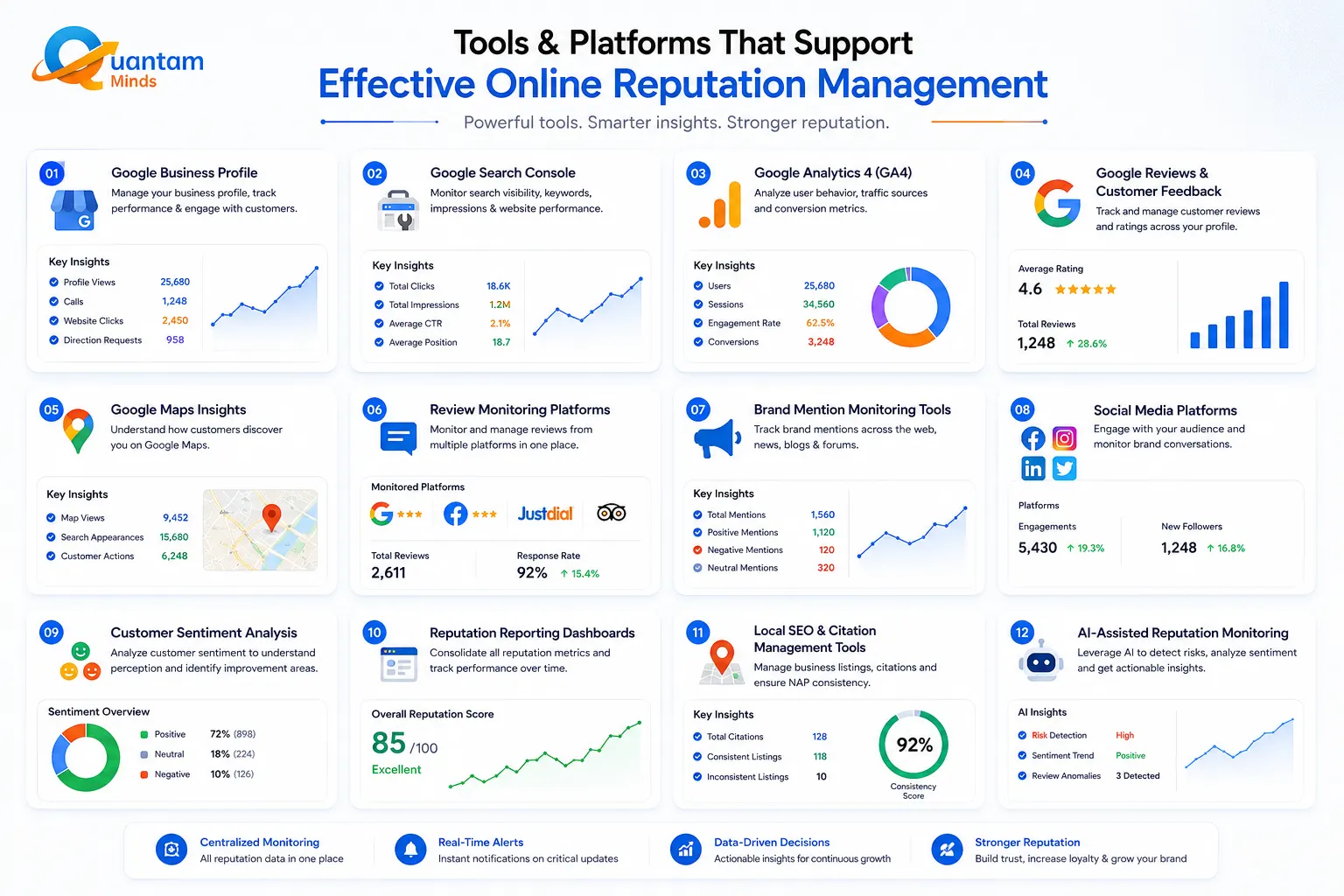
Tools & Platforms That Support Effective Online Reputation Management
A successful Online Reputation Management strategy relies on accurate data rather than assumptions. Monitoring customer sentiment, review activity, local visibility, and brand mentions across multiple platforms helps businesses understand how they are perceived online and where improvements are needed.
We use a combination of trusted industry tools and reporting platforms to monitor reputation performance, identify customer experience trends, measure engagement, and support informed business decisions. Rather than focusing on one platform alone, these tools provide a broader picture of your digital reputation across search engines, review websites, and customer touchpoints.
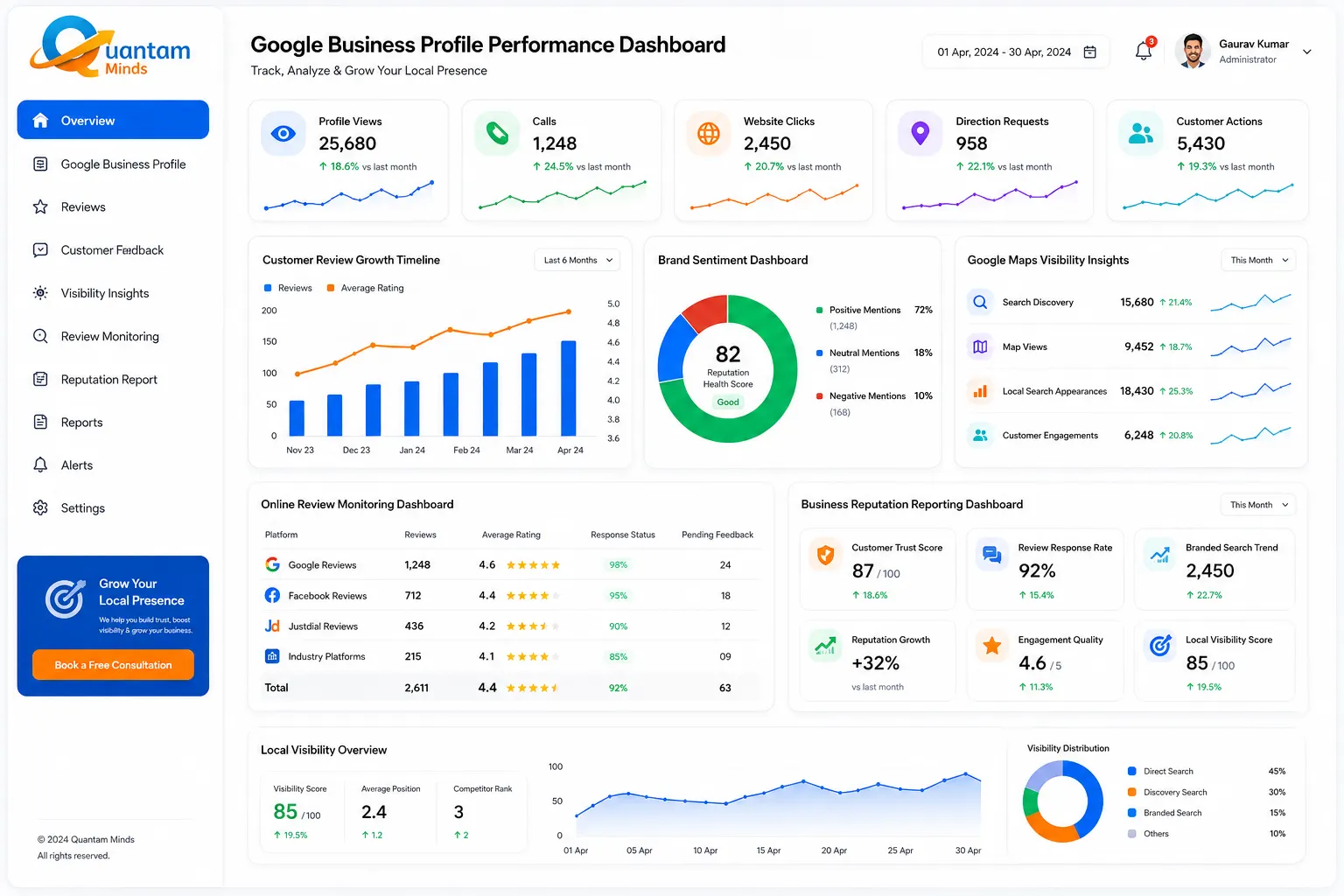
Google Business Profile
Google Business Profile is often the first place potential customers interact with a business. It provides valuable insights into how users discover your business through Google Search and Google Maps while measuring customer actions such as calls, website visits, and direction requests.
Why It Matters
- Tracks customer engagement
- Improves local business visibility
- Supports review management
- Strengthens Google Maps presence
- Measures customer discovery trends
Google Search Console
Google Search Console helps monitor how branded searches and business pages perform within Google Search. While it is primarily an SEO tool, it also provides useful insights into how customers discover your business organically.
Why It Matters
- Monitors branded search performance
- Identifies visibility opportunities
- Detects indexing issues
- Tracks search impressions
- Supports reputation-focused SEO improvements
Google Analytics 4 (GA4)
Understanding how visitors interact with your website is an important part of reputation management. GA4 provides behavioural insights that help evaluate whether customer trust is translating into meaningful engagement.
Why It Matters
- Measures user behaviour
- Tracks enquiry sources
- Evaluates engagement quality
- Monitors conversion pathways
- Supports data-driven improvements
Google Reviews & Customer Feedback
Customer reviews remain one of the strongest trust signals for local businesses. Monitoring review quality, frequency, and response consistency helps businesses understand customer sentiment while identifying opportunities for service improvements.
Why It Matters
- Builds customer trust
- Strengthens local credibility
- Improves public perception
- Encourages informed decision-making
- Supports long-term reputation growth
Google Maps Insights
Many customers discover businesses directly through Google Maps without first visiting a website. Google Maps insights provide valuable information about profile visibility, customer actions, and local search performance.
Why It Matters
- Measures map visibility
- Tracks local discovery
- Supports nearby customer acquisition
- Evaluates profile interactions
- Improves local search strategy
Review Monitoring Platforms
Businesses often receive customer feedback across multiple review websites. Review monitoring tools help consolidate this information, making it easier to identify trends, respond promptly, and maintain a consistent brand reputation.
Why It Matters
- Centralises customer reviews
- Improves response management
- Detects reputation risks
- Identifies recurring customer concerns
- Supports proactive reputation monitoring
Brand Mention Monitoring Tools
Customers discuss businesses beyond review platforms. Brand monitoring tools track online mentions across blogs, forums, news websites, and social media, providing a broader understanding of public perception.
Why It Matters
- Monitors brand conversations
- Detects emerging reputation issues
- Measures brand awareness
- Supports crisis management
- Improves strategic decision-making
Social Media Platforms
Platforms such as Facebook, Instagram, LinkedIn, YouTube, and X (formerly Twitter) often influence customer perception before direct contact. Monitoring engagement and responding consistently helps maintain a professional online image.
Why It Matters
- Builds customer engagement
- Supports brand consistency
- Strengthens community trust
- Encourages customer interaction
- Reinforces reputation across channels
Customer Sentiment Analysis
Sentiment analysis helps businesses understand how customers feel about their products, services, and overall experience. Rather than focusing only on star ratings, it evaluates recurring themes within customer feedback.
Why It Matters
- Identifies customer expectations
- Reveals service improvement opportunities
- Measures brand perception
- Supports customer experience optimisation
- Guides future business decisions
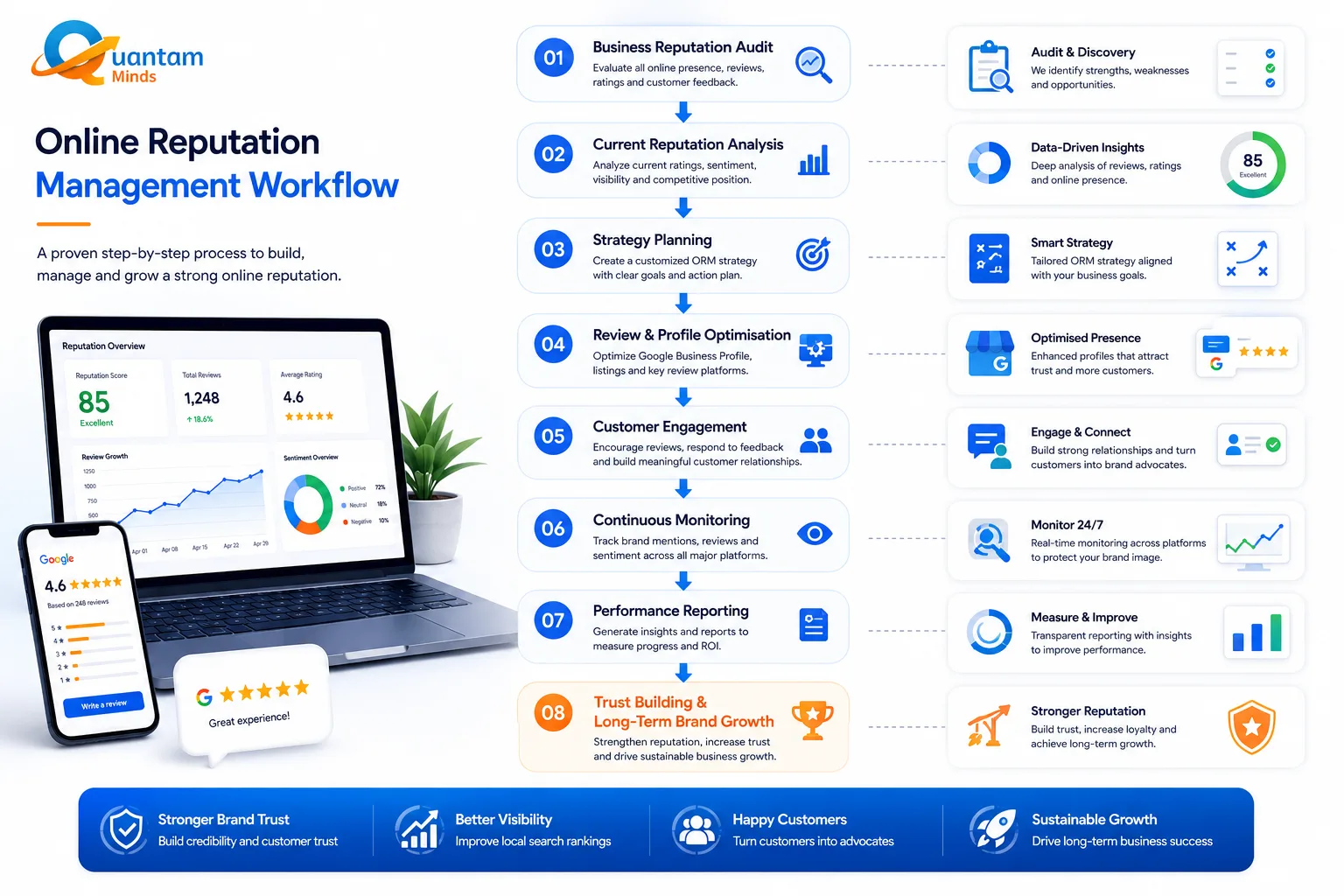
Reputation Reporting Dashboards
Clear reporting transforms raw data into actionable insights. Reputation dashboards combine information from multiple platforms into one place, making it easier for businesses to understand trends and measure progress.
Typical reporting includes:
- Review growth
- Average rating trends
- Google Business Profile engagement
- Customer sentiment overview
- Brand visibility
- Local search activity
- Response performance
- Reputation health indicators
Why It Matters
- Simplifies decision-making
- Tracks long-term progress
- Identifies improvement opportunities
- Supports transparent reporting
- Aligns reputation management with business objectives
Local SEO & Citation Management Tools
Consistent business information across directories plays an important role in building trust and supporting local visibility. Citation management tools help maintain accurate business details across multiple platforms.
Why It Matters
- Maintains consistent business information
- Supports Local SEO
- Improves customer confidence
- Reduces conflicting business data
- Strengthens local search relevance
AI-Assisted Reputation Monitoring
Modern reputation management increasingly benefits from AI-assisted monitoring tools that help identify sentiment patterns, detect unusual review activity, and organise large volumes of customer feedback more efficiently. While AI supports analysis, strategic decisions and customer communication continue to require human judgement and business context.
Why It Matters
- Speeds up reputation analysis
- Identifies emerging customer trends
- Improves reporting efficiency
- Highlights potential reputation risks
- Supports faster strategic responses
Why These Tools Work Better Together
No single platform provides a complete picture of your online reputation. Google Business Profile shows local engagement, Google Analytics explains visitor behaviour, Search Console highlights search visibility, review platforms reveal customer experiences, and reporting dashboards connect everything into meaningful business insights.
Using these tools together allows businesses to move beyond simply collecting reviews. Instead, they gain a clearer understanding of customer trust, digital visibility, and overall brand perception, enabling more informed decisions that support sustainable reputation management and long-term business growth.
Understanding Online Reputation Management Pricing
The cost of Online Reputation Management varies because every business faces different reputation challenges, competitive environments, and customer expectations. A newly established local business with only a few online reviews requires a different strategy than an established healthcare clinic, restaurant chain, ecommerce brand, or real estate company managing hundreds of customer interactions each month.
Rather than selecting a package based solely on price, businesses generally benefit from choosing a strategy that aligns with their reputation goals, customer volume, and long-term growth plans.
What Factors Influence Online Reputation Management Pricing?
Several practical factors determine the scope of an ORM project. Understanding these variables helps businesses choose services that match their requirements rather than paying for features they may not need.
Current Online Reputation
Businesses with a strong reputation usually require ongoing monitoring and optimisation, while those dealing with inconsistent reviews, inactive profiles, or negative customer sentiment may require a broader reputation improvement strategy.
Why it matters
The starting point often determines the level of work needed during the initial stages of the project.
Business Size & Customer Volume
A single-location business and a company operating across multiple cities have very different reputation management requirements.
Examples include:
- Number of business locations
- Customer enquiries received each month
- Volume of customer reviews
- Multiple Google Business Profiles
- Brand mentions across different platforms
Why it matters
Larger businesses generally require more monitoring, reporting, and ongoing management.
Industry Competition
Some industries experience significantly higher customer engagement and online competition than others.
Businesses operating in sectors such as:
- Healthcare
- Restaurants
- Hospitality
- Gyms
- Real Estate
- Education
- Ecommerce
often require more active reputation management because customers rely heavily on reviews before making decisions.
Why it matters
Competitive industries typically require more frequent optimisation and monitoring.
Number of Platforms Being Managed
Reputation management may involve several online platforms depending on your business.
These may include:
- Google Business Profile
- Google Reviews
- Facebook
- Instagram
- LinkedIn
- Justdial
- Practo
- Industry-specific review platforms
- Company website
Why it matters
Managing multiple platforms increases the scope of monitoring, reporting, and customer engagement.
Project Scope & Business Objectives
Every business has different priorities.
Some businesses require:
- Review monitoring
- Google Business Profile Optimization
- Customer response management
Others may also need:
- Reputation recovery
- Brand monitoring
- Local SEO support
- Website trust improvements
- Review acquisition strategy
- Reputation reporting
Why it matters
The wider the project scope, the more comprehensive the reputation management strategy becomes.
Reporting & Performance Monitoring
Businesses often require different levels of reporting depending on their internal processes.
Reporting may include:
- Monthly reputation reports
- Customer sentiment analysis
- Google Business Profile insights
- Review trend analysis
- Local visibility reports
- Strategic recommendations
Why it matters
Detailed reporting provides greater visibility into performance while supporting informed business decisions.
Online Reputation Management Is an Ongoing Process
Unlike a website redesign or branding project, reputation management usually continues over time because customer feedback, online reviews, and public perception constantly evolve.
New reviews are posted.
Customer expectations change.
Competitors strengthen their digital presence.
Search behaviour shifts.
For this reason, many businesses choose ongoing reputation management instead of treating it as a one-time activity.
Choose Value Over the Lowest Price
Selecting an ORM provider based only on cost can sometimes lead to missed opportunities.
A well-planned strategy should focus on:
- Building customer trust
- Improving digital credibility
- Strengthening brand perception
- Managing customer feedback professionally
- Supporting long-term business growth
Rather than simply increasing review numbers, effective Online Reputation Management Services should help businesses create a consistent and trustworthy online presence that reflects the quality of their products, services, and customer experience.
Typical Elements Included in an ORM Strategy
| Pricing Consideration |
Why It Influences the Project Scope |
| Current Online Reputation |
Determines the level of initial improvement required. |
| Industry Competition |
Influences monitoring frequency and optimisation priorities. |
| Number of Business Locations |
Multi-location businesses require broader reputation management. |
| Google Business Profile Management |
Supports local visibility and customer engagement. |
| Review Monitoring & Response |
Requires continuous tracking and timely communication. |
| Number of Platforms Managed |
Expands the scope across review sites and social channels. |
| Reporting Requirements |
Determines the depth of analytics and performance insights. |
| Business Goals |
Aligns the strategy with customer trust, visibility, and growth objectives. |
Every Business Requires a Different Reputation Strategy
There is no universal pricing model that suits every organisation because reputation management depends on business objectives, customer interaction volume, existing online presence, industry competition, and the level of ongoing support required.
Whether you are a startup building credibility, a local business strengthening customer trust, or an established organisation managing multiple locations, a customised ORM strategy provides greater long-term value than a generic package. The most effective approach is one that aligns with your business goals, supports meaningful customer relationships, and evolves alongside your brand as your online reputation continues to grow.












 Featured