Broken Links Interrupt Both User Journeys and Search Engine Crawling
Broken links create frustration for users and inefficiencies for search engines.
Imagine a visitor reading about one of your services before clicking a "Learn More" button that leads to a 404 error.
The interruption feels minor.
The lost opportunity may not be.
Broken internal links also reduce crawl efficiency, particularly on larger websites where search engines rely heavily on internal navigation to discover important pages.
Regular technical reviews help identify:
- Broken internal links
- Broken external references
- Missing images
- Invalid redirects
- Orphan content
- Navigation errors
Maintaining a healthy internal linking structure improves both user experience and crawl efficiency.
A technically optimized website performs even better when supported by consistent audience engagement. Our Social Media Marketing services help strengthen brand awareness, drive quality traffic, and complement your Technical SEO strategy with ongoing customer engagement.
Duplicate Content Creates Conflicting SEO Signals
Duplicate content is rarely intentional.
It often appears through technical website configurations rather than content copying.
Common causes include:
- URL parameters
- Category archives
- Printer-friendly pages
- HTTP and HTTPS duplication
- WWW and non-WWW versions
- Product filtering systems
- Session-generated URLs
When multiple versions of similar pages exist, search engines struggle to determine which page should receive authority and rank for relevant searches.
A comprehensive SEO Tech Audit Service identifies these conflicts and recommends solutions that consolidate authority while improving index quality.
Redirect Chains Reduce Crawl Efficiency
Redirects are a normal part of website management.
Problems arise when several redirects are connected together instead of pointing directly to the final destination.
For example:
Old URL
↓
Redirects to Temporary URL
↓
Redirects to Updated URL
↓
Redirects to Final Page
Although visitors eventually reach the correct destination, search engines must process unnecessary steps before arriving there.
Over time, redirect chains:
- Slow crawling
- Waste crawl budget
- Increase server requests
- Complicate future website maintenance
Optimizing redirect structures improves website efficiency while supporting faster indexing.
Mobile Usability Issues Limit Organic Performance
Google now primarily evaluates websites using mobile-first indexing.
If your website performs poorly on smartphones, search visibility may decline even when the desktop version appears perfectly functional.
Common mobile usability issues include:
- Small, difficult-to-read text
- Buttons placed too closely together
- Horizontal scrolling
- Slow mobile loading
- Intrusive pop-ups
- Poor touch navigation
- Inconsistent responsive layouts
Since the majority of commercial searches now originate on mobile devices, Website Technical SEO must prioritize mobile performance from the beginning rather than treating it as an afterthought.
User experience extends beyond technical performance. Our Graphic Designing services help businesses create visually consistent websites and marketing assets that improve engagement, strengthen brand credibility, and enhance the overall digital experience.
XML Sitemap Problems Make Website Discovery Less Efficient
An XML sitemap acts as a roadmap that guides search engines toward your most important pages.
However, outdated or poorly maintained sitemaps often contain:
- Deleted pages
- Redirected URLs
- Broken links
- Missing landing pages
- Incorrect priorities
Although a sitemap alone will not improve rankings, maintaining an accurate sitemap helps search engines discover new content more efficiently while reinforcing the importance of key pages.
Robots.txt Errors Can Accidentally Hide Valuable Content
The robots.txt file controls which areas of a website search engines may crawl.
Small configuration mistakes can unintentionally block important resources, including:
- Service pages
- Product categories
- Images
- CSS files
- JavaScript resources
- Entire website sections
These problems often remain unnoticed until businesses experience declining organic traffic or missing indexed pages.
A professional Technical SEO Consultant reviews robots.txt alongside crawl data to ensure valuable content remains fully accessible.
JavaScript Rendering Can Affect Search Visibility
Modern websites increasingly rely on JavaScript to deliver interactive user experiences.
While JavaScript improves functionality, it can also create SEO challenges if important content only becomes available after rendering.
Potential rendering issues include:
- Hidden content
- Missing navigation links
- Delayed rendering
- Unavailable internal links
- Incomplete page indexing
This doesn't mean JavaScript should be avoided.
Instead, websites should be developed so both users and search engines can reliably access important content regardless of rendering complexity.
Small Technical Problems Often Create Large Business Consequences
Businesses naturally focus on visible marketing activities such as publishing content, running advertising campaigns, or improving social media engagement.
Technical issues remain hidden.
Until they begin limiting growth.
One website may invest heavily in content marketing while important pages remain unindexed. Another may generate significant traffic but lose conversions because slow loading discourages visitors from completing enquiry forms.
These hidden technical barriers often have a greater impact on business growth than most owners initially realize.
This is precisely why Technical SEO Services should be viewed as a long-term business investment rather than a one-time technical exercise.
Technical SEO Warning Checklist
If several of the following situations apply to your website, it may be time to perform a comprehensive Technical SEO Audit:
- Google Search Console regularly reports crawl errors.
- Important pages fail to appear in Google Search.
- Organic traffic declined after a website migration.
- Mobile page speed feels noticeably slow.
- Core Web Vitals require improvement.
- Broken links and 404 errors appear frequently.
- Duplicate URLs exist across the website.
- Redirect chains have accumulated over time.
- XML sitemap hasn't been reviewed recently.
- Robots.txt may be blocking important resources.
- JavaScript limits search engine access to content.
- Mobile usability issues affect visitor experience.
Addressing these problems early helps prevent technical debt from restricting future SEO performance.
Technical SEO Problems and Their Business Impact
| Technical SEO Issue |
Business Impact |
| Crawl Errors |
Search engines struggle to discover important pages, reducing organic visibility. |
| Indexing Problems |
High-value pages remain absent from search results despite quality content. |
| Slow Website Speed |
Higher bounce rates, lower engagement, and reduced conversions. |
| Poor Core Web Vitals |
Weaker user experience that can negatively affect rankings and customer confidence. |
| Broken Internal Links |
Interrupted customer journeys and inefficient website crawling. |
| Duplicate Content |
Conflicting ranking signals that dilute authority and reduce search relevance. |
| Redirect Chains |
Slower crawling and unnecessary technical complexity. |
| Mobile Usability Issues |
Poor experience for mobile visitors and weaker organic performance. |
| XML Sitemap Errors |
Important pages may take longer to be discovered and indexed. |
| Robots.txt Misconfiguration |
Valuable website sections may become inaccessible to search engines. |
| JavaScript Rendering Issues |
Key content and navigation may not be fully crawled or indexed. |
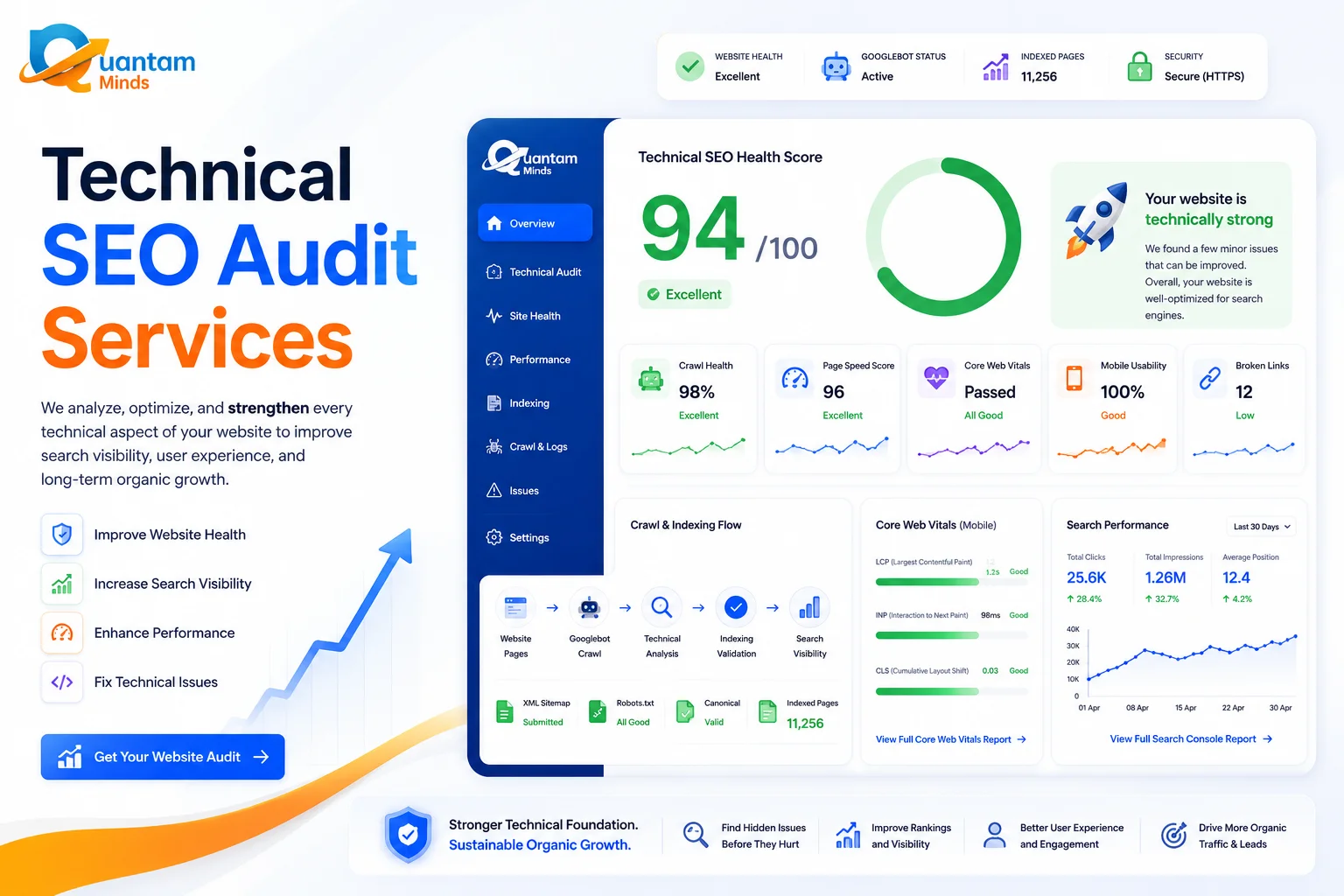
Technical SEO is not about fixing isolated warnings simply because they appear in an SEO report. Every improvement should contribute to a broader objective: making your website easier for search engines to crawl, easier for users to navigate, and better equipped to support long-term organic growth. Once these technical barriers are removed, every other SEO initiative—from content creation and link building to user experience and conversion optimization—has a much stronger foundation on which to deliver sustainable results.













 Featured