How Much Should a Small Business Budget for Digital Marketing Every Month?
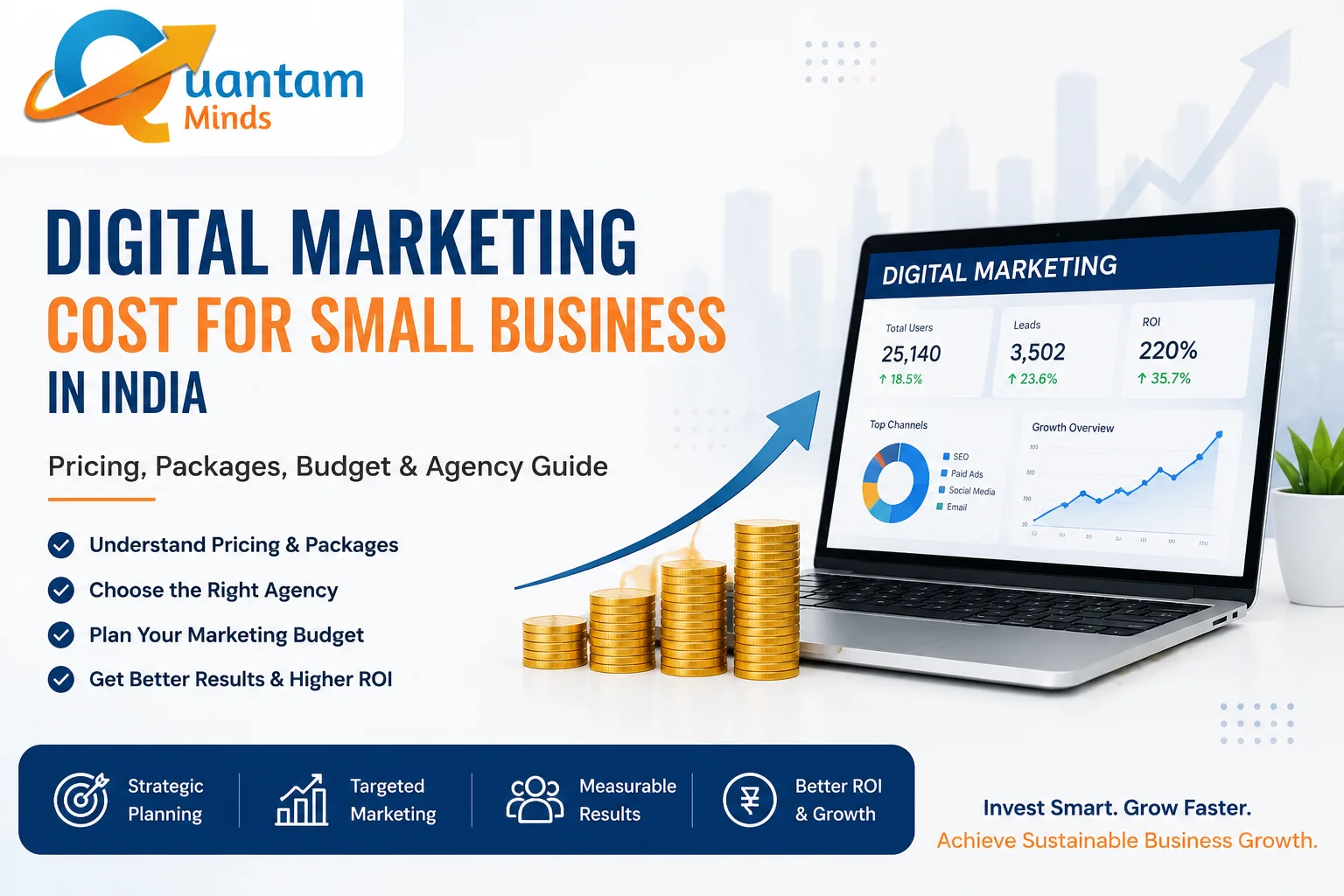
One of the first questions business owners ask before investing in online marketing is, "How much should I spend every month?" Unfortunately, there isn't a one-size-fits-all answer. The digital marketing cost for small business depends on several factors, including your industry, business goals, competition, target audience, geographic reach, and the marketing channels you choose. A local bakery, for example, will have very different marketing requirements from an ecommerce brand selling products across India.
Rather than looking for the cheapest package or copying another company's budget, small businesses should determine how much they can realistically invest while supporting consistent marketing efforts. Digital marketing is generally more effective when viewed as an ongoing business investment rather than a one-time expense. Whether you're focusing on SEO, Google Ads, social media, or website improvements, meaningful progress usually comes through continuous optimization and data-driven decision-making.
There Is No Universal Digital Marketing Budget
Many articles on the internet simply list pricing ranges without explaining why those numbers vary so much. In reality, two businesses operating in the same city can have completely different marketing budgets because their objectives are different.
For example:
- A newly launched startup may need brand awareness and website development before investing heavily in advertising.
- A local clinic may prioritize Local SEO and Google Business Profile optimization.
- An ecommerce business may allocate a larger budget toward paid advertising and conversion optimization.
- A manufacturing company may focus on SEO and lead generation through informative content.
This is why how much does digital marketing cost cannot be answered with a fixed number. The right budget depends on your business priorities and the outcomes you want to achieve over time.
What Factors Influence Your Digital Marketing Budget?
Before deciding how much to invest, it helps to understand what actually affects pricing.
Some of the biggest factors include:
| Factor | How It Affects Your Budget |
|---|---|
| Business Goals | Lead generation, branding, ecommerce sales, or local visibility require different strategies. |
| Industry Competition | Highly competitive industries often require more ongoing optimization and advertising investment. |
| Marketing Channels | SEO, Google Ads, social media, content marketing, and email marketing have different cost structures. |
| Geographic Targeting | Local campaigns typically require a different budget than national or international campaigns. |
| Website Condition | Older or poorly optimized websites may need technical improvements before marketing campaigns begin. |
| Business Size | Growing businesses usually require broader marketing support than newly established startups. |
Understanding these variables allows businesses to create a more realistic small business digital marketing budget instead of selecting packages based only on price.
A Practical Monthly Budget Framework for Small Businesses
Although every business is different, many small businesses begin with a budget that aligns with their current growth stage rather than trying to compete with larger brands.
A practical approach might look like this:
| Business Stage | Typical Monthly Budget Focus |
|---|---|
| Startup or New Business | Website foundation, Local SEO, basic branding, and limited advertising |
| Growing Small Business | SEO, Google Ads, content marketing, and social media management |
| Established Business | Multi-channel digital marketing, conversion optimization, analytics, and ongoing campaign improvements |
The exact investment varies by business goals, competition, and campaign scope. Instead of increasing your budget immediately, it is often more effective to expand marketing activities gradually as you gain performance insights.
If you're looking for personalized marketing support with local market insights, our Digital Marketing Agency in Sonipat helps startups, SMEs, and established businesses build stronger online visibility through SEO, paid advertising, website development, and data-driven digital marketing strategies.
Is ₹10,000 Per Month Enough for Digital Marketing?
This is one of the most frequently asked questions by small business owners.
The answer is: it depends on what you expect that budget to achieve.
A monthly budget of around ₹10,000 may be suitable for businesses that want to focus on one primary marketing activity, such as:
- Local SEO improvements.
- Basic Google Ads campaigns.
- Social media management.
- Content creation.
- Website maintenance.
However, expecting SEO, Google Ads, social media, website development, graphic design, and content marketing to be managed together within the same limited budget is often unrealistic.
Rather than trying to do everything at once, many businesses achieve better results by prioritizing one or two channels first and expanding their strategy as their business grows.
Should Startups Spend Less Than Established Businesses?
Not necessarily.
Startups often have smaller budgets, but they also need to establish brand awareness, build trust, and generate initial enquiries. In many cases, this means investing carefully rather than spending less.
For example:
- A startup may focus on a professionally designed website and Local SEO before launching paid advertising.
- An established business with an existing customer base may prioritize lead generation campaigns or expanding into new markets.
The ideal budget depends more on business objectives than company age.
Should Digital Marketing Be Based on Revenue?
Many business advisors recommend allocating a percentage of business revenue toward marketing. While there is no universal rule, this approach can help businesses plan more consistently.
Some companies choose to invest a higher percentage during periods of expansion, while others increase marketing budgets only after achieving certain business milestones.
Instead of asking, "What is the cheapest digital marketing package?", a more useful question is:
"What investment can my business consistently sustain while supporting long-term growth?"
Consistency often delivers greater value than making a large investment for a short period and stopping marketing activities soon afterward.
Budget for Strategy, Not Just Services
When comparing digital marketing pricing, many businesses focus only on deliverables such as the number of blog posts or social media designs.
However, effective digital marketing also includes:
- Market research.
- Competitor analysis.
- Keyword research.
- Campaign planning.
- Technical optimization.
- Performance monitoring.
- Reporting.
- Continuous improvements.
These activities may not always be visible, but they often contribute significantly to campaign performance over time.
Common Budgeting Mistakes Small Businesses Should Avoid
Many businesses either overspend without a clear strategy or underinvest while expecting significant outcomes.
Some common mistakes include:
- Choosing the cheapest agency without comparing services.
- Trying to use every marketing channel simultaneously.
- Ignoring website improvements before running advertisements.
- Expecting immediate results from SEO.
- Stopping campaigns too early because short-term expectations were not met.
- Focusing only on cost instead of long-term business value.
Avoiding these mistakes helps businesses make more informed decisions when evaluating digital marketing pricing and selecting appropriate marketing services.
Focus on Sustainable Investment Instead of Short-Term Spending
A successful digital marketing cost for small business strategy is rarely determined by the highest budget or the lowest price. Instead, it comes from investing consistently in the marketing activities that align with your business goals, customer behaviour, and competitive landscape.
Whether you choose SEO, Google Ads, social media marketing, or a combination of digital channels, your budget should support a realistic, long-term strategy rather than short-term expectations. As your business grows, your marketing investment can evolve alongside it, allowing you to expand campaigns, explore new opportunities, and continuously improve your digital presence based on measurable business insights.
Your marketing budget should be allocated to channels that continue delivering value over time. If long-term search visibility and consistent organic traffic are among your priorities, exploring our SEO Services can help you understand how strategic optimization supports sustainable business growth while making the most of your monthly marketing investment.
What Is Included in Digital Marketing Pricing Packages and What Are You Actually Paying For?
One of the biggest reasons business owners feel confused about digital marketing pricing is that no two agency proposals look exactly the same. One agency may offer a monthly package for ₹15,000, while another quotes ₹50,000 for what appears to be a similar service. At first glance, it can be difficult to understand why there is such a significant difference.
The reality is that digital marketing packages are not priced only by the number of services listed. They are influenced by the amount of strategic planning, technical expertise, content creation, campaign management, reporting, and ongoing optimization required to achieve your business objectives. A lower-priced package may cover only basic execution, while a more comprehensive package often includes research, analysis, continuous improvements, and dedicated support.
Rather than asking, "Which package is the cheapest?", a more valuable question is, "What am I actually paying for?" Understanding this helps businesses compare agencies more effectively and choose services that match their goals instead of selecting a package based solely on price.
Digital Marketing Pricing Is More Than a List of Services
Many businesses assume they are paying only for activities such as posting on social media or running advertisements. In practice, a significant portion of digital marketing happens behind the scenes.
Before any campaign goes live, agencies typically spend time understanding:
- Your business goals.
- Target audience.
- Competitors.
- Industry trends.
- Existing website performance.
- Customer behaviour.
- Marketing priorities.
This planning stage helps ensure that marketing activities are aligned with business objectives instead of being carried out without direction.
That is why digital marketing services pricing often reflects strategic expertise as much as the actual execution.
Strategy and Planning Form the Foundation
Every successful marketing campaign begins with a clear strategy.
Without planning, businesses may invest in channels that are unlikely to support their objectives or spend money on activities that don't complement one another.
A strategy phase often includes:
- Business discovery sessions.
- Market research.
- Competitor analysis.
- Customer persona development.
- Keyword research.
- Marketing channel selection.
- Campaign planning.
- Budget allocation recommendations.
Although these activities are not always visible in a proposal, they influence almost every decision made throughout the campaign.
Content Creation Is Often a Significant Part of the Investment
Content plays an important role across nearly every digital marketing channel.
Whether you're improving SEO, managing social media, or running paid advertising, content helps communicate your business value to potential customers.
Depending on the package, content creation may include:
- Website copy.
- Blog articles.
- Service pages.
- Social media captions.
- Ad copy.
- Landing page content.
- Email campaigns.
- Visual content planning.
Higher-quality content generally requires research, editing, optimization, and collaboration, which is one reason pricing can vary between agencies.
SEO Work Goes Beyond Keywords
When businesses compare digital marketing pricing packages in India, they often assume SEO simply involves adding keywords to website pages.
Modern SEO is much broader.
Typical SEO work may include:
| SEO Activity | Purpose |
|---|---|
| Website Audit | Identify technical and content-related issues |
| Keyword Research | Understand what potential customers are searching for |
| On-Page Optimization | Improve page relevance and user experience |
| Technical SEO | Resolve crawling, indexing, and performance issues |
| Local SEO | Improve visibility for nearby customers |
| Internal Linking | Help search engines and users navigate the website |
| Content Optimization | Expand topical authority and improve search relevance |
| Performance Monitoring | Measure visibility and identify improvement opportunities |
Because SEO is an ongoing process, many agencies include regular optimization rather than treating it as a one-time task.
Paid Advertising Requires Continuous Management
Businesses often assume that once a Google Ads campaign is created, the work is complete.
In reality, successful advertising typically requires continuous monitoring and refinement.
This may involve:
- Campaign setup.
- Audience targeting.
- Keyword management.
- Advertisement testing.
- Budget optimization.
- Bid adjustments.
- Conversion tracking.
- Landing page recommendations.
- Performance reporting.
Campaigns are usually reviewed regularly because market conditions, competition, and customer behaviour can change over time.
Landing Pages Are Designed to Improve Conversions
Many digital marketing agency pricing packages include landing page development because sending paid traffic to a general website homepage is not always the most effective approach.
Dedicated landing pages are typically designed around a specific objective, such as:
- Lead generation.
- Appointment bookings.
- Product enquiries.
- Service promotions.
- Event registrations.
A landing page often includes focused messaging, simplified navigation, strong calls to action, and content that matches the advertising campaign.
Creating these pages involves planning, writing, design, technical implementation, and ongoing optimization.
Technical Work Happens Behind the Scenes
Technical improvements are among the least visible parts of digital marketing, yet they often have a meaningful impact on website performance and user experience.
Depending on the project, technical work may include:
- Website speed improvements.
- Mobile optimization.
- Security updates.
- Technical SEO fixes.
- Analytics configuration.
- Conversion tracking.
- Form testing.
- Broken link corrections.
- Structured data implementation.
Many businesses overlook these tasks because visitors rarely notice them directly, but they contribute to a stronger digital foundation over time.
Reporting Helps You Understand Performance
Professional reporting is much more than sending traffic numbers at the end of each month.
Useful reports help businesses understand:
- Which marketing channels are performing well.
- How users interact with the website.
- Which pages attract the most visitors.
- Search visibility improvements.
- Advertising performance.
- Conversion trends.
- Areas requiring additional optimization.
Transparent reporting allows businesses to make informed decisions rather than relying on assumptions.
Ongoing Optimization Is Where Long-Term Value Is Created
Digital marketing is not a "set it and forget it" activity.
Search algorithms evolve, advertising platforms introduce new features, customer behaviour changes, and competitors adjust their own marketing strategies.
For this reason, agencies often spend considerable time on:
- Reviewing campaign performance.
- Updating content.
- Improving SEO.
- Refining advertising campaigns.
- Testing new strategies.
- Monitoring technical issues.
- Improving website usability.
These continuous improvements explain why monthly retainers are common within digital marketing services pricing.
Meetings, Communication, and Business Support Also Matter
One area that businesses frequently overlook is communication.
Regular strategy discussions help ensure marketing efforts remain aligned with changing business priorities.
Depending on the package, agencies may include:
- Monthly review meetings.
- Performance discussions.
- Strategic recommendations.
- Priority planning.
- Campaign adjustments.
- Consultation calls.
- Business growth planning.
Although meetings do not directly generate traffic or enquiries, they often improve decision-making and strengthen collaboration throughout the project.
Comparing Digital Marketing Packages More Effectively
Before choosing an agency, compare the value of each proposal rather than only the monthly price.
Consider questions such as:
- Does the package include strategic planning?
- Is SEO ongoing or limited to initial setup?
- Who creates the content?
- Are landing pages included?
- How often are reports shared?
- Is technical website optimization covered?
- How frequently are campaigns reviewed?
- Are meetings included for planning and performance discussions?
- Can the package grow as the business expands?
Looking beyond the price helps businesses understand what they are actually receiving.
Digital Marketing Pricing Reflects Expertise, Scope, and Long-Term Support
The cost of a digital marketing package is influenced by far more than the number of deliverables listed in a proposal. Strategy, research, technical implementation, content creation, campaign management, reporting, and continuous optimization all contribute to the overall investment. Businesses that understand these components are better equipped to compare digital marketing agency pricing packages fairly and choose services that align with their objectives.
Whether you're evaluating digital marketing pricing packages in India for a startup, local business, or growing company, the goal should be to invest in a strategy that supports sustainable growth over time. The right package is not necessarily the least expensive or the most comprehensive—it is the one that matches your business goals, budget, and marketing priorities while providing the expertise needed to adapt as your business evolves.
Many digital marketing packages include paid advertising, but the quality of campaign strategy and optimization often varies. Learn how our Google Ads Services focus on audience targeting, budget optimization, conversion tracking, and ongoing campaign improvements to help businesses maximize every advertising rupee.